Department of Politics and International Studies
Beyond Outreach: Rethinking the Interrelation of Transitional Justice and Communication


Overview
Across the world, the centrality of the interrelation between transitional justice and communication is reflected in a plethora of organisational activities, institutional lines of work and community-led processes.
Yet its acknowledgement in policy-making, academic research and peacebuilding’s everyday often remains incommensurate with its practical significance. Moving away from viewing transitional justice only as a set of legal and institutional mechanisms, this research project argues that communication has to be considered as constitutive to the achievement of transitional justice rather than treated as a desirable byproduct of core tasks such as collecting evidence, conducting trials and writing final reports. Moreover, when communication is understood more as a postscript to the how-to guide of transitional justice in practice, processes show insufficient adequate resource allocation, planning errors and a scarcity of communication expertise to draw upon.
Far from arguing that communication would fully account for every facet of transitional justice, a systematic engagement with this understudied interrelation is indispensable for better understanding how these processes are negotiated and kept in motion. In the field of transitional justice, representational and non-representational communication coalesce. Communication is understood as profoundly political, encompassing unmediated, fictional and factual communication, as well as visual and performative communication (arts), with social media acting as a vehicle for communication (HCPR).
Objectives
The research project interrogates the interrelation between transitional justice and communication, shifting the analytical focus from communication as an afterthought to communication as constitutive of transitional justice processes. By bridging transitional justice research, political science, media, communication and memory studies, to name a few disciplines, the project invites interdisciplinary dialogue about innovative conceptual and methodological approaches to examine how transitional justice’s lived experiences and institutional frameworks are interrelated with communication, strategic or otherwise.
Through academic-practitioner exchange and collaborative research projects, Beyond Outreach contributes to the contemporary debates within the transitional justice field. To shape these contributions, the project is guided by the following objectives:
- Fostering interdisciplinary dialogue: an academic nexus brings together transitional justice research, political science and media studies, facilitating critical inquiry into the constitutivity of communication within the social fabric of transitional justice processes.
- Facilitating multi-actor exchange and international research network: a collaborative international network bridges research and practice, fostering direct exchange between scholars, practitioners and affected communities to ensure that studies remain responsive to the lived experiences of transitional justice across diverse geographical contexts.
- Producing critical knowledge: this network produces rigorous, empirically grounded insights on the interrelation between transitional justice and communication in processes such as truth-seeking, restorative justice, memory work and accountability in conflict-affected societies.
Collaborative framework, activities and network engagement
To advance these inquiries and foster concrete collaborations, the project undertakes initiatives and activities designed to bridge research and practice. Strategic objectives which also were reflected in the knowledge exchange hosted in December 2025 at the Department of Politics and International Studies, in collaboration with the Conflict, Rights and Justice (CRJ) cluster and the University of Warwick.
Titled Beyond Outreach: The Contribution of Strategic Communication to Transitional Justice Theory and Practice, the gathering brought together 19 international researchers and practitioners to explore the interrelation between these fields of action, discuss potential research pathways, practice-oriented projects and initiate an emerging international network.
- Collaborative working groups and research labs: ongoing, interactive spaces where researchers, practitioners, civil society actors and communities co-develop and reflect upon conceptual frameworks, share methodological tools and design future collaborative research projects.
- Dialogues and knowledge transfer: strategic dialogues, public conversations, expert exchanges and publications dedicated to translating academic insights, research findings and field expertise into accessible formats for broader societal and institutional conversations.
Get involved
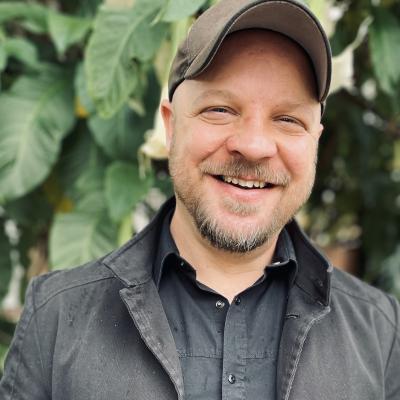
Researchers, practitioners, civil society, institutions and communities interested in participating or co-creating workshops and spaces, contributing to ongoing research and shaping future project trajectories are warmly invited to get in touch with Rousbeh Legatis, Project Lead (rousbeh@gmail.com).
References
HCPB, Hub for the Study of Hybrid Communication in Peacebuilding, School of Information, Journalism and Communication, University of Sheffield.