“The degree that runs Britain”: Why I chose PPE and my experience so far


BSc Politics, Philosophy and Economics (PPE) student Siddhant Pawar reflects on why they chose to study the combined subject at SOAS and how it’s helped them understand what drives the decisions societies make.
By the time I reached sixth form, I was certain about one thing: I wanted to pursue something rooted in economics. I was drawn to the subject because it offered a way to understand how societies allocate resources, justify inequality, and make trade-offs that shape everyday life. But I also knew that studying economics on its own came with limitations I wasn’t ready to commit to.
High school economics, as useful as it is, barely scratches the surface of what the discipline becomes at university. It functions more as a prerequisite than a true representation of the subject. University-level economics is far more technical and often heavily mathematical.
While I appreciate the importance of quantitative tools, I knew early on that a purely mathematical approach to understanding society was not where my strengths or interests lay. I wanted economics, but I wanted it embedded in something broader.
Politics in practice
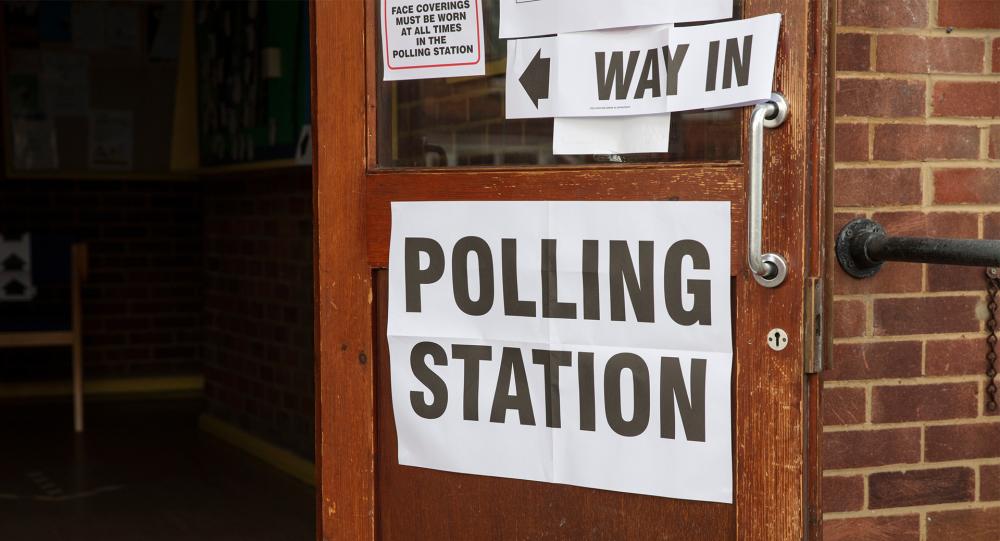
Alongside my academic interests, I was actively involved in local politics. Through canvassing and campaigning, from supporting my MP to engaging with local assembly members, I gained first-hand exposure to how politics works on the ground. These experiences naturally pushed me towards politics as an academic discipline.
At that stage, applying for joint degrees in economics and politics felt like the obvious choice. It allowed me to combine my interest in economic structures with my engagement in political processes. For a while, that seemed like the answer.
That certainty didn’t last.
Discovering philosophy by accident
Everything changed when I read Utilitarianism by John Stuart Mill. What struck me was not just the argument itself, but the way it reframed politics entirely. Instead of treating political outcomes as self-evidently good or bad, Mill forced me to ask deeper questions: What counts as happiness? Who gets to decide? Can harm ever be justified in the name of the greater good?
This was my first real encounter with philosophy, and it altered how I approached political and economic questions. I began to realise that beneath every policy decision lies a set of moral assumptions, often left unstated.
I began to realise that beneath every policy decision lies a set of moral assumptions, often left unstated.
Philosophy gave me the language and tools to interrogate those assumptions rather than accept them as neutral or inevitable.
Why PPE, not just a combination?
Philosophy is often dismissed as an exclusive old men’s club, detached from real life and obsessed with abstract puzzles. That perception couldn’t be further from my experience. Over the past semester, studying philosophy alongside economics and politics has been the most intellectually rewarding part of my degree.
Ironically, it was the subject I discovered last that I ended up enjoying the most. Philosophy sharpened my thinking in a way no other discipline had, as described in the blog I previously wrote on my experience studying philosophy at SOAS.
PPE is often referred to as the degree that runs Britain. While that phrase can sound clichéd, there is a reason it persists. Many politicians, journalists, and policymakers have studied PPE not because it hands them answers, but because it trains them to think across disciplines.
What makes PPE distinctive is not just the range of subjects but the way they interact. Together, they encourage a heterodox way of thinking that resists easy conclusions.
Instead of asking what works, PPE asks who it works for, why it works, and at what cost.
How is it going so far?
The course has been challenging, often more demanding than I anticipated. Moving between mathematical reasoning in economics, empirical analysis in politics, and abstract argumentation in philosophy requires constant adjustment. But that challenge has been precisely what makes PPE worthwhile.
I now read the news differently. I approach policy debates with more scepticism and more nuance. I am less interested in slogans and more interested in underlying assumptions. PPE hasn’t simplified the world for me. It has made it more complex, but also more intelligible.
Looking ahead
One of PPE’s greatest strengths is its flexibility. The skills it develops, from analytical reasoning to quantitative literacy and critical thinking, open up a wide range of paths after graduation. More importantly, it prepares you for roles where decisions have real consequences.
The skills [PPE] develops, from analytical reasoning to quantitative literacy and critical thinking, open up a wide range of paths after graduation.
I didn’t choose PPE because it offered certainty. I chose it because it offered the tools to navigate uncertainty responsibly. Looking back, it feels less like a strategic choice and more like an inevitable one.
Header image credit: Giammarco Boscaro via Unsplash.
About the author
Siddhant Pawar is a SOAS Student Content Creator and PPE student who somehow thinks writing about the world might just help fix it (it probably won’t, but he’s trying anyway). He writes his reflections at bloggingseeds.wordpress.com.