Inaugural Lecture Series: Professors Nimer Sultany and Vanja Hamzić

Key information
- Date
- Time
-
6:00 pm to 8:00 pm
- Venue
- SOAS Gallery
- Room
- SOAS Gallery Lecture Theatre
- Event type
- Lecture & Event highlights
About this event
Professor Nimer Sultany and Professor Vanja Hamzić from the College of Law deliver their inaugural lectures on two different and distinctive themes.
Professor Sultany's inaugural lecture is titled, The Responsibility of Intellectuals, the Question of Palestine, and the Genocide in Gaza.
The genocide in Gaza provided intellectuals with a test like no other. This talk will discuss the responsibility of intellectuals in cases of grave injustice and mass atrocities and will analyse the different modes of abdication of intellectual responsibility that build on a longer trajectory of abdication when Palestine is the issue.
Professor Hamzić's inaugural lecture is Resisting Extractivist Temporalities: Racial Capitalism, Colonial Gender Binaries and Gender-Diverse Worlds.
This inaugural professorial lecture examines how racial capitalism has depended not only on the extraction of land, labour and bodies, but also on the production of temporal orders that render human life legible, classifiable and extractable. Drawing on archival and ethnographic research in 18th-century Greater Senegambia, alongside broader work on Muslim gender-nonconforming cosmologies in South and Southeast Asia, the lecture traces how extractivist temporalities were bound up with the colonial construction of a gender binary. Through law and emerging sciences of the human, plural forms of personhood were increasingly reorganised into legible categories of male and female, as colonial structures sought to stabilise these categories and reshape relations of socio-cosmological belonging.
At the same time, the lecture explores how gender-diverse forms of selfhood unsettled these classificatory regimes and persisted through alternative relationships between personhood, kinship, land, time, and the living and ancestral worlds. By bringing these histories into dialogue, it argues that colonial gender binaries and extractivist temporalities were mutually constituted, while gender-diverse worlds reveal the historical contingency of racial capitalism and its gendered assumptions, sustaining alternative ways of relating to personhood, time, and collective life.
About the speakers
Professor Nimer Sultany
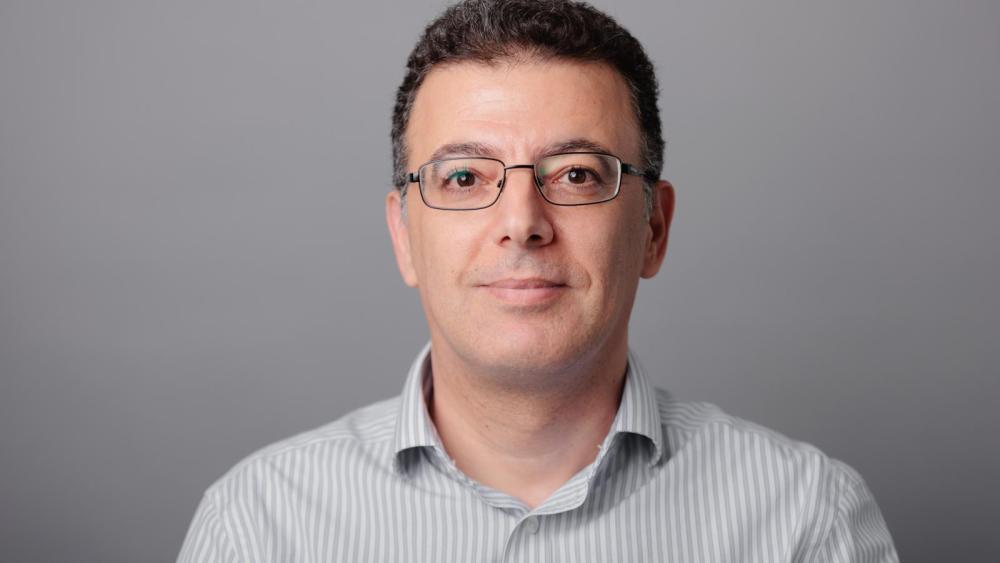
Dr Nimer Sultany is Professor of Law and Chair of the Centre for Palestine Studies. He holds a Doctor of Juridical Science from Harvard Law School and has received a British Academy Fellowship and a postdoctoral fellowship at SUNY Buffalo Law School. He served as elected Chair of SOAS’s Academic Assembly (2023 to 2026) and is Editor-in-Chief of the Palestine Yearbook of International Law. Previously, he practised human rights law in Palestine and directed the Political Monitoring Project at Mada al-Carmel. His research focuses on constitutional theory, comparative constitutionalism and Israeli jurisprudence. His book, Law and Revolution (Oxford University Press, 2017), won two major legal scholarship prizes in 2018.
Professor Vanja Hamzić
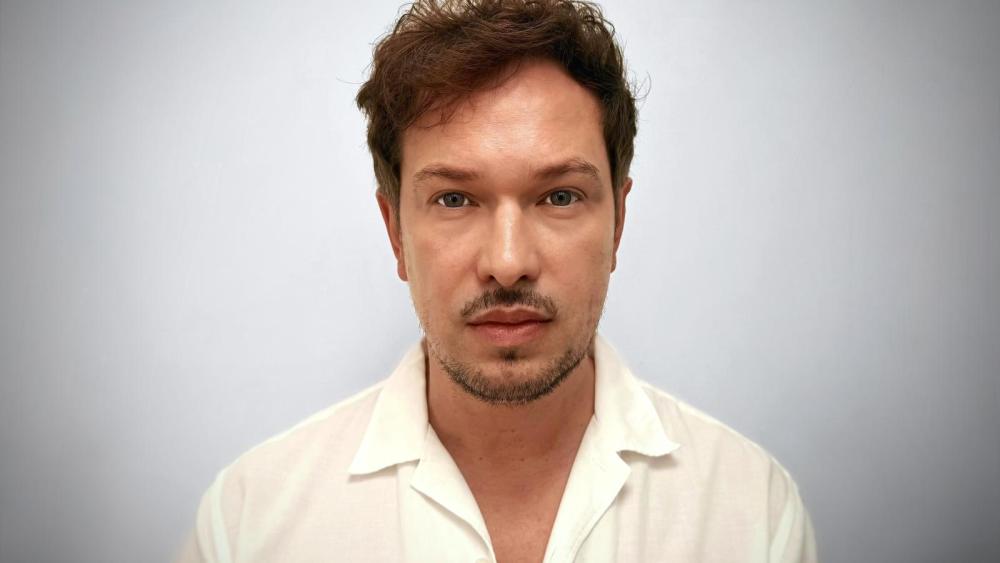
Vanja Hamzić is Professor of Law, History and Anthropology at SOAS University of London. Professor Hamzić’s research focuses on colonial, postcolonial and decolonial formations of human selfhood, with particular attention to gender-nonconforming Islamicate communities in Ottoman, Mughal and West African imperial contexts, as well as in contemporary Pakistan, Indonesia, Mali and Senegal. Professor Hamzić is the author, among other publications, of Sexual and Gender Diversity in the Muslim World: History, Law and Vernacular Knowledge (2016, 2019), and is currently writing a book on the emergence of an imposed gender binary in 18th-century Greater Senegambia and colonial Louisiana.
SOAS Inaugural Lecture Series
The SOAS Inaugural Lecture Series recognises that research is an integral part of university life and offers a platform for newly appointed and promoted professors to share their significant contributions to their field while also showcasing the overall strength, depth, and vitality of research at SOAS.