Painting protest: literature, art, and the avant-garde in Socialist Burma

Key information
- Date
- Time
-
5:30 pm to 7:00 pm
- Venue
- Russell Square: College Buildings
- Room
- RB01
About this event
During Burma's Socialist era (1962 to 1988), avant-garde artists faced authoritarianism, isolationism, and relentless censorship.
Cut off from South and Southeast Asian art networks, they forged a revolutionary practice: transforming experimental literature into visual protest by unlocking the subversive potential between these forms. Funnelled into illustrating books and magazines due to a decimated economy, artists absorbed figurative language from translations of T.S. Eliot, Baudelaire, Brecht, and Mayakovsky, transforming these literary devices into coded visual language. This intertextual practice—moving fluidly between painting, literature, and poetry—demonstrates how modernism is sustained under systematic constraint when the infrastructures of modern art are absent or hostile.
This talk examines how artists leveraged Buddhist terminology to theorise radical formal innovations without Western art historical vocabulary, activating canvases into political protest and turning book covers and magazines into alternative exhibition spaces when galleries were surveilled. Unlike European modernists who rejected realism, Burma's avant-garde embraced it as a vehicle for resistance, embedding protest within state-sanctioned forms while maintaining connectivity to global networks through India and the Eastern Bloc.
Examining individual artist histories, Carlson demonstrate how resistance tactics transferred across creative genres rather than geographic borders, offering vital lessons for how creative expression persists when states attempt to silence dissent.
Registration
This event is free, open to the public, and held in-person only.
South East Asian Studies Seminar Series
This semester’s theme foregrounds how communities across Southeast Asia have sought to live, believe, and flourish through the practices of everyday life. From ritual and governance to kinship and sport, the seminars explore how ordinary practices are imagined and enacted across different times and places. The series brings historical and ethnographic perspectives into conversation to illuminate the ethical, political, and creative dimensions of daily life in the region.
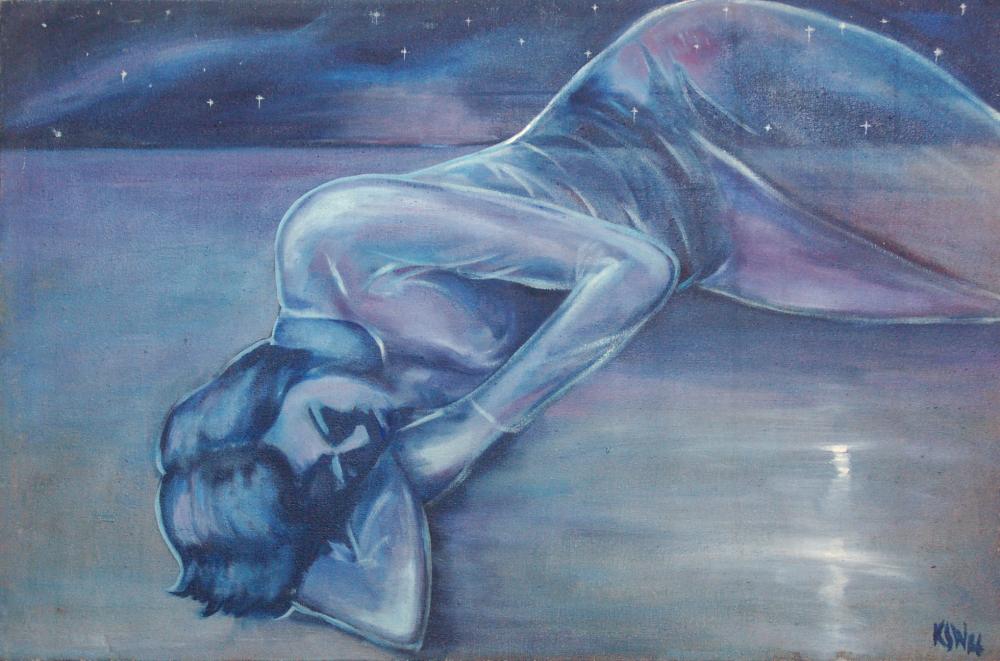
Image credit: Khin Swe Win, Sleeping Lady, oil on canvas, 91.4 x 121.9 cm, 1981. Collection of the artist. Photo by the author.
About the speaker
Melissa Carlson, researches Southeast Asian modernism in the late 20th and early 21st centuries and is a Senior Teaching Fellow at SOAS University of London. She earned her PhD at UC Berkeley, focusing on cultural flows shaping regional art. Her publications include work with the British Museum, Sharjah Art Museum, and National Gallery Singapore. A Paul Mellon Postdoctoral Fellow (2025/26), she is completing a monograph on modernism in Socialist Burma.
Contact
Contact email: centres@soas.ac.uk
Image gallery