Social reproduction and precarious and unpaid labour

Key information
- Date
- Time
-
6:00 pm to 8:00 pm
- Venue
- Online on Zoom
- Event type
- Seminar
About this event
The Series in Advanced Political Economy (SAPE) was launched in 2022, jointly organised by Departments of Economics at SOAS University of London and New School for Social Research (NSSR) in New York.
In the second half of the series this year, we have really broadened the scope to look at concrete ways the global south working class is exploited to sustain the profit extraction from the global north. We discussed global value chains and what they mean for international workers’ solidarity, especially in times where the working conditions of the advanced West have deteriorated so much and many workers are just struggling to get by.
We followed up this discussion with the topic of immigration and labour, and emphasised the right to stay home just as important as the right to move. Finally, we discussed another source of huge concern for job security, which is the rise of AI. We looked at the way automation and AI have changed the work and labour process, and how trade unions and workers can start pushing back against algorithmic management and take back control of their own labour process and workplaces.
Connecting nicely from the past weeks’ conversations, we are now due to look at the permanently overlooked part of the economy, that is social reproduction. We have Dr. Anamary Maqueira Linares and Dr. Luiza Nassif Pires to discuss social reproduction and precarious and unpaid labour, chaired by Dr. Srishti Yadav.
Below are the bullet points Anamary has kindly provided.
- An overview of social reproduction as a useful framework to understand and analyze Global South contexts.
- A brief overview of the transformations regarding the role of the state, the families and the market in the social reproduction of the Cuban people.
- Increasing commodification of different social reproduction and care processes since 2010 in a context of income deterioration, increasing inequality and poverty.
- Families, particularly women, are taking the lion’s share of previously socially or publicly provided processes.
- A de-statization process has occurred as a combination of direct withdrawal of the government’s role as a social provider, less state presence in other socio-economic affairs, and the current social reproduction crisis.
- An analysis of the implications of those transformations for the current momentum, marked by an exacerbation of U.S. hostile policies.
Speakers
Anamary Maqueira Linares
Luiza Nassif Pires
- Srishti Yadav [Chair]
About the speakers
Anamary Maqueira Linares is Assistant Professor of economics at University of Manitoba. She is a feminist political economist working within the social reproduction umbrella in Global South contexts, particularly the Latin American region and Cuba. She received her PhD in Economics from the University of Massachusetts, Amherst in 2024. She also received a MSc from the Latin American Faculty of Social Sciences, Quito, Ecuador, in Development Economics, and a Bachelor's degree in Economics from the University of Havana (2009) where she worked as a young instructor for almost 5 years before spending 2.5 years in Quito, Ecuador.
Luiza Nassif Pires is an Assistant Professor at the institute of economics at Unicamp and the co-director of Made-USP, the Research center on Macroeconomic of Inequalities . She holds a Ph.D. in Economics from The New School for Social Research and is a research associate in the Gender Equality and Economics program at the Levy Economics Institute at Bard College, where she lectured in the graduate programs in Economic Theory and Public Policy. She is also a member of the board of directors of the International Association for Feminist Economics (IAFFE).
- Srishti Yadav [Chair] is Assistant Professor of Economics at Azim Premji university in India, where she teaches political economy and history of economic thoughts. Srishti holds a PhD in Economics from The New School for Social Research, New York, and an MA in Economics from Jawaharlal Nehru University (JNU), New Delhi. Her research interests are Political Economy, Agrarian Change, Economic Development, Economics of Caste, and Gender.
About Series in Advanced Political Economy (SAPE)
The Series in Advanced Political Economy (SAPE) was launched in 2022, jointly organised by Departments of Economics at SOAS University of London and New School for Social Research (NSSR) in New York. We have been promoting political economy beyond university walls and created a platform where academics, activists, trade unionists, and many others, could come together to discuss pressing issues and explore ways to address the multi-faceted crises of our time. As of October 2025, these lectures have collectively gained nearly 68,000 views on YouTube, in addition to the live in-person and Zoom webinar attendees.
We are back this year with new collaborators - Forum for Real Economic Emancipation (FREE) have now joined us to organise the Series, and the Series will be hosted by the UK's General Federation of Trade Unions Educational Trust (GFTU ET). Building on the academic and theoretical discussions we have had in the first 2 years, we now aim to connect them more directly with workers’ struggles. The objective is to reach a wider audience, particularly union members, leaders, and shop stewards through the GFTU’s broad network of trade unions in the UK and internationally. We would also like community and grassroots organisers to join our exciting debates on workers’ fights for a better future.
Please find the 2025/26 course programme below. All sessions take place at 6-8pm UK time.
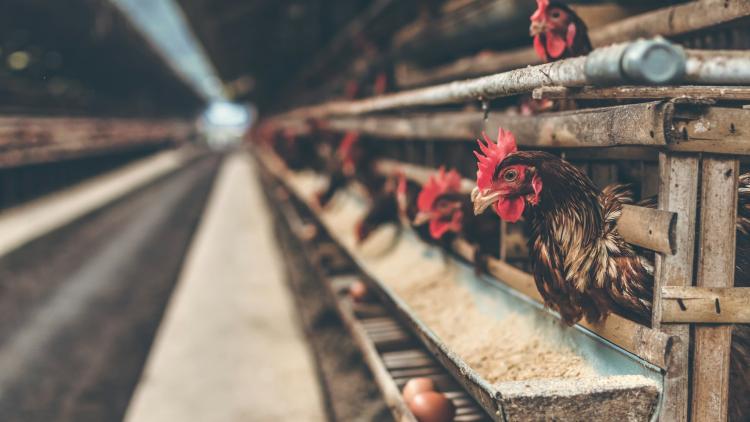
Header image credit: Volha Flaxeco via Unsplash.