Has spirituality become big business? Philosopher challenges the commercial takeover


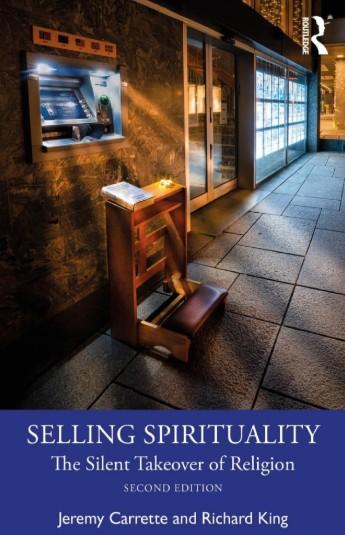
The new edition of Selling Spirituality co-authored by Richard King, Professor of Global Philosophy at SOAS, argues that spirituality is becoming increasingly commercialised and calls for its socially and ethically transformative potential to be reclaimed.
The book, co-written with Professor Jeremy Carrette of the University of Edinburgh, explores the popularity of workplace mindfulness programmes designed to boost productivity, to booming global wellness industries promising happiness, resilience and professional success, asking whether spirituality has become increasingly commercialised.
The authors delve into how spirituality has become tied to digital capitalism, corporate culture and responses to the environmental crisis, while questioning whether it challenges economic power or reinforces it.
Our argument has never been that spirituality is inherently problematic. Rather, we want to ask what happens when spiritual traditions, many of which contain profound resources for ethical reflection and social criticism, are repackaged to serve the priorities of the market.
Rather than rejecting spirituality, they argue for reclaiming its ethical and socially transformative potential. They suggest religious and spiritual traditions can offer powerful tools for confronting inequality, ecological destruction and the values of consumer capitalism.
Speaking on the book, Professor King added:
"Our argument has never been that spirituality is inherently problematic. Rather, we want to ask what happens when spiritual traditions, many of which contain profound resources for ethical reflection and social criticism, are repackaged to serve the priorities of the market.
Twenty years after the first edition, the commercialisation of spirituality has become even more pervasive. Practices that might once have encouraged people to question dominant social values are increasingly being promoted as techniques for adapting to them. The danger is that spirituality becomes a way of helping people cope with the pressures of contemporary capitalism rather than questioning the structures that produce those pressures.”
The publication forms part of Professor King’s wider research programme exploring the relationship between religion, philosophy and modernity, particularly the ways in which modern Western categories have shaped understandings of non-Western intellectual traditions. His next monograph, Mysticism as Philosophy, will be published by Bloomsbury in February 2027.
This acts as a follow up to the first edition published in 2005, which explored how religious and spiritual traditions were increasingly being repackaged and marketed to serve the interests of corporations, consumer culture and neoliberal capitalism.
Selling Spirituality: The Silent Takeover of Religion, second edition, by Jeremy Carrette and Richard King, is published by Routledge (2026).