“Multilateralism is at the very heart of protecting our planet”: UN’s Inger Andersen at SOAS


Inger Andersen, Under-Secretary-General of the United Nations and Executive Director of the United Nations Environment Programme, warned the next five years are crucial to limiting the scale and duration of global warming, speaking at a SOAS event this week.
Inger described climate change, biodiversity loss, and pollution as a “triple planetary crisis”, arguing that environmental degradation is increasingly linked to food insecurity, displacement, economic instability and conflict.
Looking at diplomacy from a wider lens, Inger said: "The only way we can find a way forward is by engaging and understanding the position of the other and not vilifying that. Understanding the position of the other, that is the way in which you can find ways, and you can meet in the middle."
Advocating for multilateralism remains the best option to tackle these issues, Inger argued, saying that international agreements have already delivered significant public-health gains but, further progress will depend on governments, businesses and citizens maintaining pressure for change and translating scientific evidence into policy action.
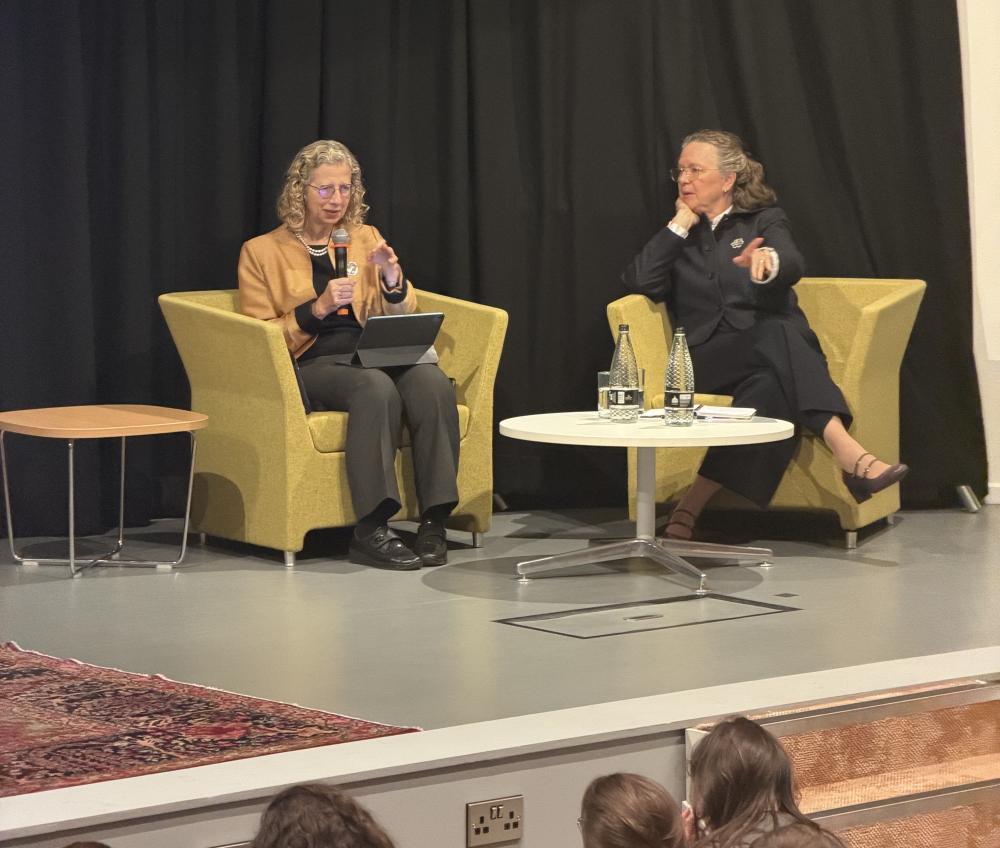
"Multilateralism is at the very heart of protecting our planet and ensuring that we leave the planet in a safe way for the next generation. And so, I put it to you that multilateralism, with all its complexities and warts and all, all its imperfections, is our very best and our only option to secure a safe, sustainable, and healthy and prosperous future for us all." Inger added.
The only way we can find a way forward is by engaging and understanding the position of the other and not vilifying that. Understanding the position of the other, that is the way in which you can find ways, and you can meet in the middle.
Welcomed by Interim Deputy Vice-Chancellor (Education) & Provost Professor Elisa Van Waeyenberge and speaking to an audience alongside SOAS’s Laura Hammond, Professor of Development Studies and Deputy Vice-Chancellor of Research and Knowledge Exchange, Inger pointed to the recovery of the ozone layer as in how environmental diplomacy can be achieved.
She also highlighted the work of the Montreal Protocol, a phase style project that released a vast majority of ozone-depleting substances, demonstrating what nations can accomplish when science, political, and international cooperation are fully aligned behind a common objective.
Reflecting on her own time at SOAS, where she studied Development Economics before beginning a career spanning the United Nations, the World Bank and international conservation organisations, Inger encouraged students to engage with global challenges, saying: "This place holds a very special place in my heart. It's a unique opportunity that you are all journeying. And I encourage you, this magnificent school, to make really good use of it.”
The event was brought about by the work of the Centre for International Studies and Diplomacy, with further engagement with the student community, alumni and researchers from across SOAS.