Creating change: Lucia Hanmer's journey from grassroots activism to leadership


A passion for social justice led Lucia Hanmer (BA Economics and Geography, 1985) from grassroots activism in London to senior roles at the Department for International Development (DFID), UN Women, and the World Bank Group (WBG).
Across multiple continents, she has focused on tackling poverty, improving lives, and levelling the playing field for women and girls. We sat down with Lucia to reflect on a remarkable career.
A career at the heart of social change
Lucia’s career has often intersected with major political and policy shifts, though she has stayed out of party politics.
During the early Thatcher years—and the intense social and political upheaval of the 1970s and 80s—she worked in London’s immigrant communities, women's refuges and grassroots organisations. Then, armed with a PhD in economics, she joined DFID soon after its creation by the Blair government in 1997, when UK development policy made poverty reduction a top priority.
I chose Economics and Geography at SOAS because I was working with immigrant communities in London. There was a lot of political and social activity in London in the 80s.
In 2011, Lucia helped establish the economic section at the newly formed UN Women under Michelle Bachelet, the former Chilean president.
From 2013-2023, Lucia was at the World Bank, where she led production and publication of the landmark report Voice and Agency: Empowering Women and Girls for Shared Prosperity (2014). Building on the WBG annual flagship World Development Report 2012, which focused on gender, Voice and Agency broke new ground with its findings that girls with little or no education are far more likely to be married as children, suffer domestic violence, lack agency in multiple spheres, and spend their lives in poverty than girls who spend their early years in school. Launched by former Senator and US Secretary of State Hillary Clinton—then a presidential candidate—Voice and Agency was picked up by top-tier media globally, and it continues to resonate among scholars and development experts around the world.
The latter years of her career saw her working on the conflict and fragile states agenda, drawing out the implications for gender equality, including as part of the World Bank Group's Gender Strategy 2024-2030 and researching the gender dimensions of forced displacement.
SOAS as a turning point
Before taking on roles at DFID, UN Women, and the World Bank, Lucia completed a BA in Economics and Geography at SOAS.
"I chose Economics and Geography at SOAS because I was working with immigrant communities in London. I lived and worked amongst the West Indian community in Brixton,” she says. “There was a lot of political and social activity in London at that time in the 80s."
She viewed economics as a tool. "I thought economic development was key to ending dependency of countries that were former colonial domains of the UK. I wanted to understand how economics could increase independence and autonomy for both individuals and societies."
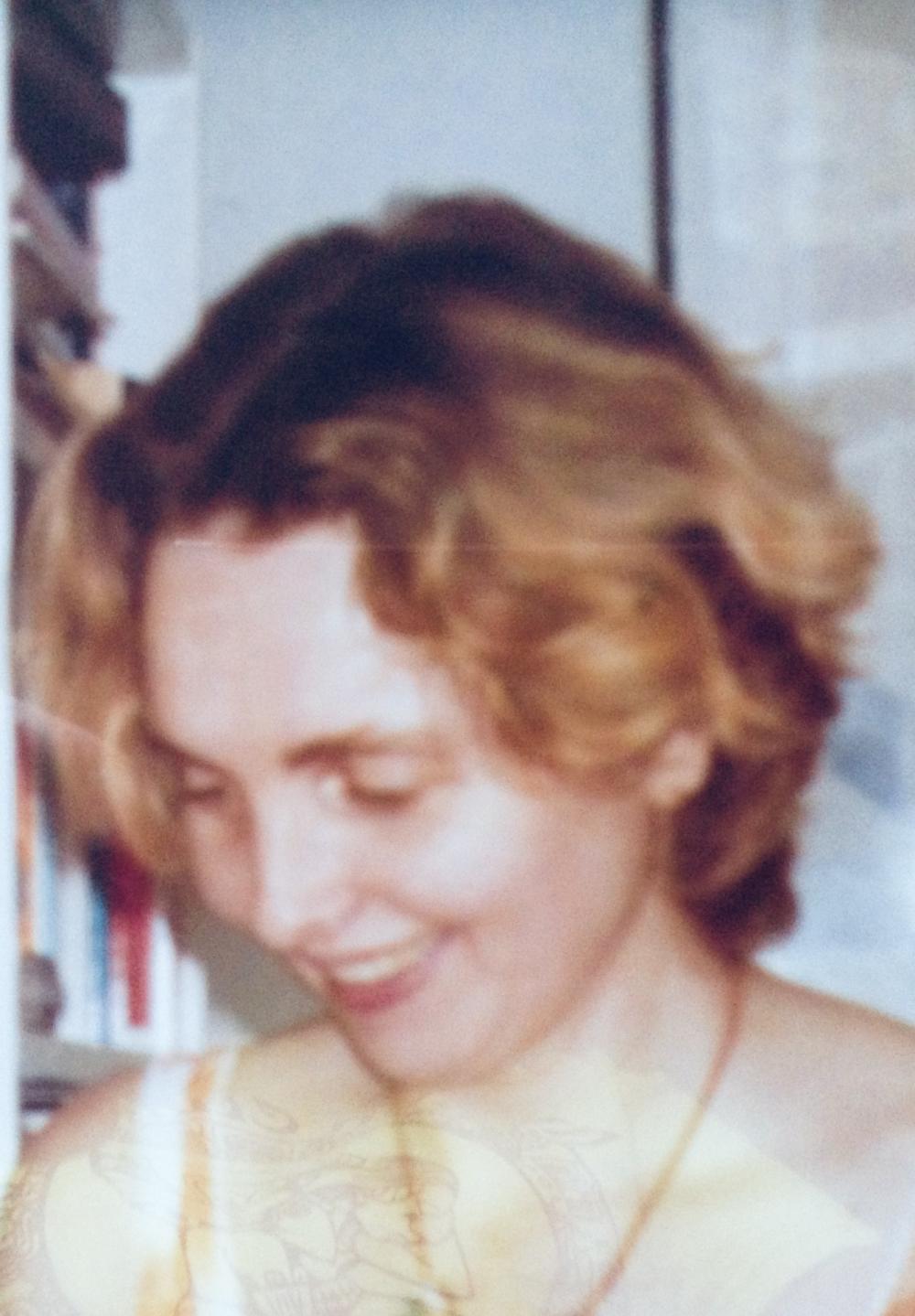
As a mature student, Lucia was initially unsure how she would fit into the university environment; at 26 she was older than most other students and had taken her Economics A level at evening classes to meet the entrance requirements. But those concerns quickly disappeared. SOAS provided a rich intellectual and social community where she felt welcomed and challenged in equal measure.
"It was actually really good because there were quite a few students from diverse backgrounds,” she says. “I had a core group of four of us who'd all come into SOAS not through the A-level, straight-out-of-school route."
During her BA, she secured a grant for fieldwork in Zimbabwe—until 1980, it was known as Southern Rhodesia—just after it became independent from Britain. “The anti-apartheid movement had been a huge mobilising power in London in the 1980s and through the movement we learnt about colonialism, African history and the struggle of African peoples for liberation.”
Zimbabwe had just achieved independence and Lucia was based with a Jesuit community outside Harare who had been at the forefront of the fight for social justice during the war. There, she recalls doing fieldwork on the role of women in the communal lands, “looking at new policies towards the communal lands and formation of agricultural policies of the new government."
Her academic journey continued at Cambridge. "My economics professor at SOAS, Terry Byers, encouraged me – it didn’t occur to me that Cambridge was an option. So, I went to Cambridge for an MPhil in Economics, Politics, and Sociology of Development. Then I did a PhD in economics focusing on industrialisation and development."
A leader in global development
Lucia’s goal was always to work on policy. At DFID, she got the chance to work extensively on poverty reduction strategies. "There was a big push that aid should be about reducing poverty,” she says. “I worked on strategies which linked debt reduction to formulation and implementation of national poverty reduction programs."
She collaborated directly with governments in lower-income economies in Kenya, Malawi, Mozambique, Uganda, Tanzania, and Zambia, served as senior economic advisor in DFID's South Asia Department and served in Guyana as the World Bank's Resident Representative.
In 2011, she moved to the newly created UN Women, where she worked to elevate women’s economic empowerment. “It was nice to be part of something new," she says. She found the UN Women team inspiring, including then-Executive Director Bachelet and a seasoned Senegalese economist, Yassine Fall, now Foreign Minister of Senegal. “Yassine really inspired me; her passion for development and commitment to giving voice to women and helping them mobilise to achieve their goals never wavered”.
Moving to WBG in 2013, Lucia became lead economist in the gender unit soon after its creation, as gender assumed higher priority as a cross-cutting thematic area across all areas of WBG operations. Voice and Agency, drawing on interdisciplinary scholarship from around the world, specifically prioritised gender-based violence and biased social norms as constraints on women’s agency and opportunities to achieve their potential—making poverty reduction even harder.
“What was really important was that the work it catalysed on responding to and preventing gender-based violence, which has grown significantly within the World Bank’s portfolio,” she says.
Lucia’s focus shifted to gender equality in fragile and conflict-affected states in her final years with the World Bank. By the early 2000s, the number of people who had been forcibly displaced had reached all-time highs, numbers which continue to be surpassed.
Teaming up with gender-based violence expert Diana Arango, she led the Gender Dimensions of Forced Displacement research program, which examined how forced displacement affects women and men differently.
In partnership with UNHCR and a global team of academics, the program produced evidence to inform gender-responsive policy and program design encompassing income and multi-dimensional poverty, livelihoods, gender norms and the risks of experiencing intimate partner violence and child marriage.
Driven by purpose
What has driven Lucia throughout her career? "I think it's a mixture of intellectual challenge... and working on teams where I felt I could contribute and make a meaningful difference,” she says.
What makes me hopeful is seeing the intelligence, resources and commitment that younger people are bringing to the international development space.
"I started off in my early 20s in a Women's Aid refuge in London... Then suddenly when I got to be in my 50s, it all started to be connected with development outcomes and poverty reduction,” she says.
Helping vulnerable people achieve their potential, make their own decisions, and live better, more fulfilling lives—using data and evidence and measuring results—has been the throughline. Four decades later, it’s still a terrific journey.
But, Lucia adds, “The world has become a much more challenging place – the relatively stable balance of global powers which shaped the development policy environment I work in throughout my career is rapidly unravelling. Hard-won gender equality and racial and social justice gains are under threat and being reversed in some places.
The rise of the far right is truly terrifying. The impact of climate change is being felt in real time and war is creating human suffering on a huge scale – paths out of conflict and fragility are proving hard to establish and the dismantling of much of the bilateral aid system removes much-needed responses.
What makes me hopeful is seeing the intelligence, resources and commitment that younger people are bringing to the international development space. I am continually impressed by the entrepreneurial talent I see coming out of Africa, where I have the closest connections.
While teaching gender and development at Sciences Po in Paris, I met talented students from all over the world who have a huge amount to offer. The world is a wealthier and more knowledgeable place, and while many people remain excluded, a greater diversity of people now have access to these resources.”
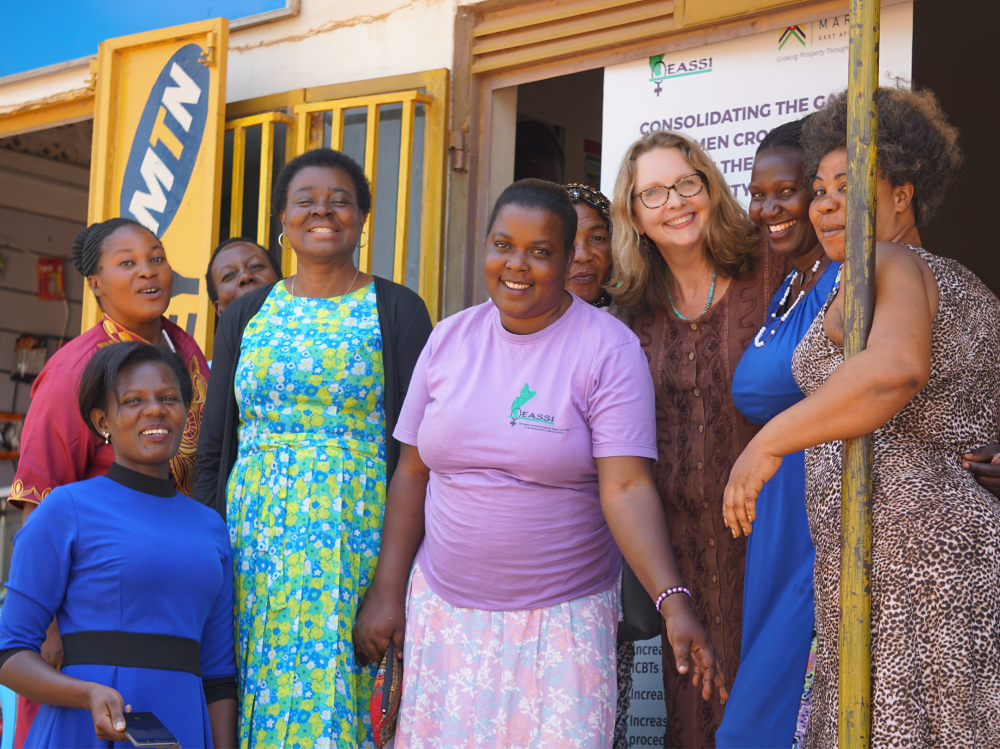
Header image: Lucia in Uganda with the women of the EASSI initiative.