How the UK Home Office turns immigration enforcement into TikTok entertainment


Why is the Home Office on TikTok? Dr Shreeta Lakhani explores how Secure Borders UK turns immigration into a viral spectacle, using rapid editing and recurring imagery of "dangerous migrant men" to normalise border enforcement and make it seem like protection rather than violence.
The UK Home Office has turned border enforcement into TikTok content. Since launching Secure Borders UK in January 2026, the account has amassed more than 50,000 followers and almost 400,000 likes through videos of immigration raids, workplace arrests and deportations.
Normalisation of border violence
According to the Home Office, the account was created to communicate directly with the public and counter misinformation about immigration. It is tempting to see this as an example of government departments modernising their communications. Yet to do so would be to overlook the political significance of the account.
These videos do far more than communicate immigration policy. They reveal how contemporary state propaganda is being reshaped through spectacle, affect and the algorithmic logics of platform media, raising profound questions about the normalisation of border violence.
These videos do far more than communicate immigration policy. They reveal how contemporary state propaganda is being reshaped through spectacle.
Answering these questions requires paying attention not simply to what the Home Office says, but how it communicates. I analysed 138 videos published during the account's first six months. Broadly, the archive consisted of two forms of content. The first documented immigration raids, arrests and deportations. The second comprised what I describe as informative spectacles: videos explaining immigration policy, promoting new enforcement measures and encouraging members of the public to report suspected immigration offences.
While these categories served different communicative functions, they participated in the same political project. One spectacularised the exercise of border enforcement and the other legitimised it.
The visual grammar of enforcement
While analysing the TikTok account in sequence, the visual and sonic repetition became impossible to ignore. Across multiple videos, immigration enforcement was transformed into a continuous visual performance. There were raids on restaurants, nail stores, car washes and construction sites.
Immigration enforcement no longer appeared as a series of individual events but as a continuous spectacle of state power.
These videos had rapid editing, suspenseful music, dramatic captions and repeated visual motifs that cultivated an atmosphere of urgency and fear. The same visual grammar repeated itself until immigration enforcement no longer appeared as a series of individual events but as a continuous spectacle of state power.
The dangerous migrant man
At the centre of this spectacle stands a remarkably consistent figure: the dangerous migrant man. Whether described as an 'illegal migrant', a 'foreign criminal' or a member of a smuggling gang, migrant masculinity becomes the primary site onto which criminality, danger and insecurity are projected within this entire digital archive.
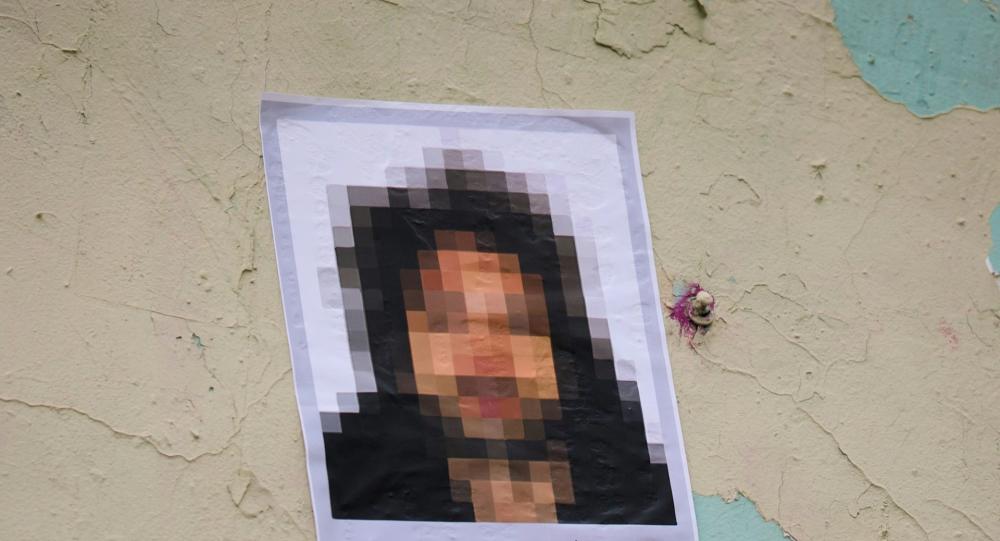
These men rarely speak. Their faces are often blurred or reduced to police mugshots. Instead, within these videos, we watch immigration officers narrate events, justify enforcement and present themselves as protecting the British public. Across dozens of videos, danger, criminality and foreignness become increasingly difficult to disentangle, while immigration enforcement itself comes to feel reassuring, inevitable and common sense.
This is what makes Secure Borders UK politically significant. The account is not simply communicating immigration policy as the Home Office claims. It is producing a contemporary form of state propaganda.
State propaganda in the TikTok age
This propaganda works through the selective organisation of reality: who is seen, who is heard, whose suffering disappears and, crucially, what viewers are invited to feel. Through spectacle, repetition and affect, border violence is stripped of its political and human consequences and recast as protection, justice and public service.
It cultivates an affective common sense in which immigration raids, detention and deportation appear necessary, reassuring and even desirable. Border violence is no longer simply justified. It is made to feel like care and the only possible solution.
Why does this matter? Social media platforms now play an increasingly central role in shaping how political issues are encountered and felt. TikTok, in particular, does not simply host content; its algorithms structure visibility, attention and engagement, amplifying material that is emotionally resonant and easily shared.
Since its launch, Secure Borders UK has amassed more than 50,500 followers, illustrating how state narratives about migration can circulate through the same attention economy that drives viral entertainment.
Public consent cultivated through platform media
Migration governance has always depended upon public consent for policies that expose certain populations to detention, deportation and prolonged precarity. Secure Borders UK demonstrates how this consent is increasingly cultivated through platform media.
Border violence is spectacularised, circulated and increasingly legitimised [through TikTok].
By transforming raids, arrests and deportations into compelling digital content, the account invites viewers to understand border violence as necessary and morally justified. At the same time, it renders migrant precarity both invisible and consumable.
The significance of Secure Borders UK therefore lies not simply in the fact that the Home Office is on TikTok, but in what this reveals about the changing relationship between platform media, state propaganda and border enforcement. Border violence is no longer only administered through the state. It is spectacularised, circulated and increasingly legitimised through the affective and algorithmic logics of the platform itself.
About the author
Dr Shreeta Lakhani is a Lecturer in Gender Studies and Convenor of MA Gender, Sexuality and Global Politics (online)