Lecturer in Anthropology
Department of Anthropology and Sociology
MA Social Anthropology (Online)

You are viewing:
Key information

Key information
- Duration
- 2 years (accelerated) or 3 years
- Start of programme
- September 2026 or January 2027
- Attendance mode
- Part time
- Location
- SOAS Online
- Fees
-
MA: £12,000
PGDip: £8,000
PGCert: £4,000
- Course code
- POD-SOANTM2PD, POD-SOANTM2PD, POD-SOANTM3PD, POD-SOANTM3PD
- Entry requirements
-
We will consider all applications with a 2:2 (or international equivalent) or higher in a social science or humanities subject.
Course overview
The MA Social Anthropology explores how anthropologists understand cultural difference through theory, debate, and ethnographic practice.
The programme provides a strong foundation in the history and development of anthropology, and the discipline’s approach to understanding cultural difference and diversity. You'll develop skills in research design, ethnographic writing, communication and analysis, while examining how anthropology engages with pressing global challenges.
Delivered fully online through six modules, the course moves from core anthropological perspectives to advanced research methods, optional interdisciplinary study, and culminates in an independently designed ethnographic dissertation. Graduates will be able to apply anthropological thinking across different industries, organisations, and communities.
Studying at SOAS
We're ranked 6th in the UK and 19th in the world for Anthropology and 10th in the world for Academic Reputation in Anthropology (QS World University Rankings 2026). SOAS Anthropology is also ranked 2nd among UK Anthropology departments (REF 2021).
Study Tours
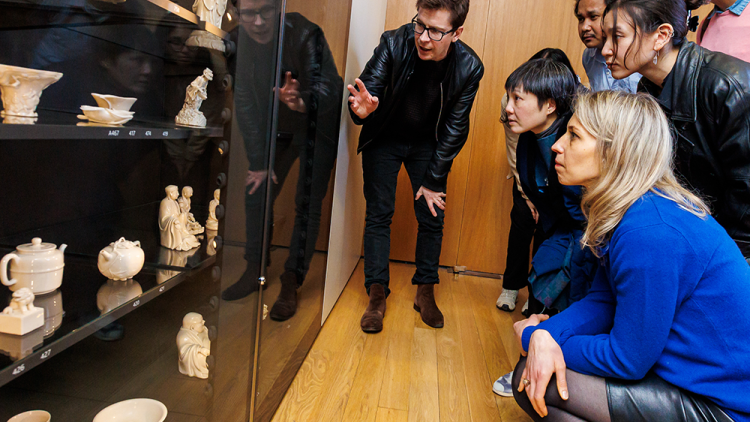
All postgraduate students can take part in our Study Tours and explore the world. Destinations include New Delhi, Lahore, Seoul, Luang Prabang, Almaty, Bishkek, Kigali, Johannesburg, and Doha. For more information, see our Study Tours page.
Structure
You can study this programme either as an accelerated two-year part-time degree or a three-year part-time degree.
Two-year route (accelerated):
- Year 1: 90 credits (three modules)
- Year 2: 90 credits (three modules, including either a capstone dissertation or project)
Three-year route:
- Year 1: 60 credits (two modules)
- Year 2: 60 credits (two modules)
- Year 3: 60 credits (two modules, including either a capstone dissertation or project)
Both routes are designed to build a strong foundation in your first year, followed by greater flexibility in later years, including optional modules and the opportunity to complete a capstone dissertation or applied project.
Year 1
Year 2 - Core
Year 2 - Guided
Teaching and learning
Each module is 14 weeks long and represents 300 hours of learning: 100 hours of assessment preparation and 200 hours of directed and self-directed learning with extensive teacher contact throughout.
Assessment
Instead of exams, we use a range of assessment methods designed to reflect different learning styles and develop real-world employability skills, giving you a real opportunity to demonstrate what you’ve learned.
You’ll be evaluated through a mix of innovative practical projects, like a patchwork project and a mini-ethnographic project; participation activities such as a consultancy report; and reflective written work.
Scholarships
| Title | Deadline date |
|---|---|
| SOAS Online Scholarships |
Fees and funding
Discounts and flexible payment options
We offer alumni and corporate discounts, plus flexible payment options. Eligible alumni receive £1,000 off their first postgraduate year. Groups of two or more employees from the same company get 10% off, subject to verification. Students can also pay fees in two or three instalments if needed.
Find out more on the Online learning discounts and scholarships page.
Employment
We know you’re choosing this programme to advance your career and make a real difference in the world – that’s why we embed employability in every module.
Teaching and assessments are designed to develop a range of skills valued by employers, including critical thinking, communication, research, and the ability to synthesise, reflect upon, and evaluate information.
This is why recent graduates from the Department of Anthropology and Sociology have been hired by the BBC, New York Times, World Bank Group, UNICEF, and Deloitte.