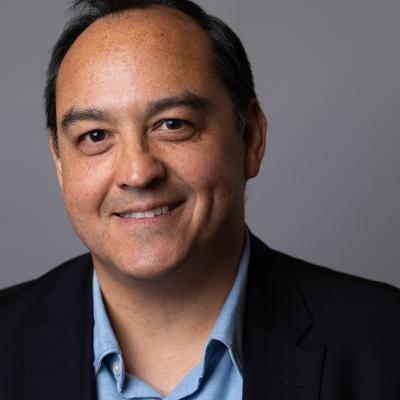
Reader in Economics
Department of Economics
MSc Data Science and Economic Policy (launching soon)

You are viewing:
Key information

Key information
- Duration
- 1 year
- Start of programme
- September
- Attendance mode
- On campus
- Fees
-
Home: £12,965
International: £25,320 - Course code
- PGTF0366
- Entry requirements
-
We will consider all applications with 2:2 (or international equivalent) or higher in any discipline that does not incorporate a strong data science component. In addition to degree classification, we take into account other elements of the application such as your supporting statement. References are optional but can help build a stronger application if you fall below the 2:2 requirement or have non-traditional qualifications.
Course overview
The MSc Data Science and Economic Policy is designed for students seeking to combine a solid training in the principles of economic policy and an expertise on data science approaches.
Drawing on SOAS’s world-leading applied research on economic policy, the programme allows students to assess economic policies around the world, develop coding skills, apply economic models and understand how data science techniques can guide policy making.
The programme covers major policy challenges, including the climate crisis, structural transformation, macrofinancial stability, poverty, inequality, corruption, as well as labour market and social protection policies. It offers students a unique opportunity to analyse these challenges both from a qualitative and a quantitative perspective and critically assess how data science is shaping economic policies and socio-economic systems in the 21st century.
Why study MSc Data Science and Economic Policy at SOAS?
- We are ranked top 30 in the UK for Economics (QS World University Rankings 2025).
- You will have access to the Centre for Sustainable Finance, the Centre for Sustainable Structural Transformation and the Centre for AI Futures.
- You will obtain transferable analytical skills that are essential for careers in businesses, financial institutions, international organisations, government agencies and non-government organisations, particularly in roles that require combining data science skills with economic policy expertise.
Global partnerships
Programme participants are eligible to apply for a co-supervised dissertation, collaborating with members of the Economics department and leading experts from international organisations. Such organisations include the World Bank, the International Trade Centre (ITC), the United Nations Industrial Development Organisation (UNIDO), the United Nations Conference on Trade and Development (UNCTAD) and the International Labour Organisation (ILO).

Structure
The MSc programme includes a supervised research project (60 credits), four compulsory taught modules (15 credits each), and four guided optional modules (15 credits each) selected from a pool of available modules. The modules are delivered through lectures, seminars and workshops.
Teaching and learning
Lectures
Most modules involve a 50-minute lecture as a key component.
Seminars
In seminars and workshops, students actively engage in hands-on exercises, explore case studies, and contribute to structured group discussions that deepen their understanding of the material and encourage critical reflection.
Dissertation
A significant part of the work for the degree is devoted to the completion of a 10,000-word research project that can focus on theoretical or applied issues.
SOAS Library
SOAS Library is one of the world's most important academic libraries for the study of Africa, Asia and the Middle East, attracting scholars from all over the world. The Library houses over 1.2 million volumes, together with significant archival holdings, special collections and a growing network of electronic resources.
Employment
The MSc Data Science and Economic Policy is designed for students seeking to develop coding skills and apply data science techniques to the design and evaluation of economic policies. It is also suitable for those interested in gaining a critical understanding of the socio-economic and ethical implications of applying Machine Learning and Artificial Intelligence in policymaking. The programme offers a strong gateway to career opportunities in government, international organisations, financial institutions, non-governmental organisations and the private sector. Its advanced training also provides an excellent foundation for doctoral research.