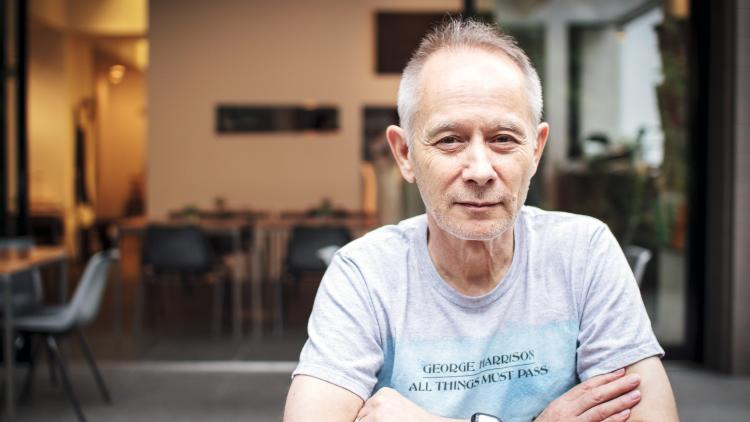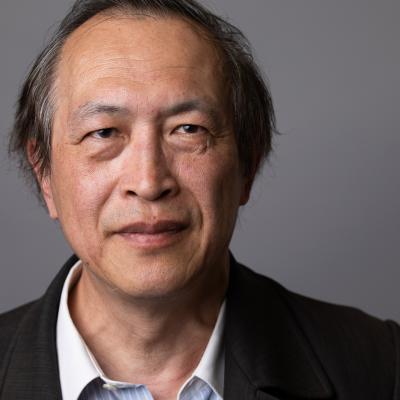
Senior Lecturer in Linguistics and the Languages of China
Department of Linguistics
& School of Languages, Cultures and Linguistics
MPhil/PhD in Linguistics

You are viewing:
Key information

Key information
- Duration
- 3 years
- Start of programme
- September
- Attendance mode
- Full-time or part-time
- Location
- On campus
- Fees
-
Home (full-time): £5,055 per year
International (full-time): £23,390 per year - Entry requirements
-
We normally require a 2.1 bachelor's degree (or its equivalent) plus a Masters degree in appropriate subject area plus one reference. In exceptional cases we may accept applicants who do not meet these criteria if they show evidence of a strong Masters degree and/or appropriate level of relevant work experience. International applicants should also see Doctoral School English language requirements
Course overview
The MPhil/PhD in Linguistics is a research training programme which combines foundational and advanced courses in the core areas of linguistics, training on research methods and research work leading to a dissertation.
The Department is strongly research-oriented, and through a combination of courses, advanced seminars and individual supervision, aims to provide the intellectual discipline, knowledge and skills required of a well-rounded researcher. Supervision is offered in theoretical, descriptive and comparative linguistics, translation and language pedagogy. Depending on the research topic, it may also be possible to arrange joint supervision with specialists in other departments.
Why study Linguistics at SOAS?
- SOAS is ranked 9th in the UK for Linguistics and 12th for Modern Languages (QS World University Rankings 2026).
- Modern Languages and Linguistics at SOAS has been ranked 10th in the UK in the Research Excellence Framework (REF) 2021.
- We've also been ranked 4th for research environment – with 100% of our research ranked as 'internationally excellent' and 85% as 'world-leading' – and 8th for research outputs in the REF 2021.
- SOAS is unique in the UK for offering a range of subject combinations that include the opportunity to study the languages, literature, and cultures of Africa, Asia and the Near and Middle East.
- Unrivalled staff expertise in the UK and worldwide in a wide range of Asian, African, Middle Eastern and Australian languages.
- Access to SOAS’s library, one of the UK’s five dedicated national research libraries.
- Dedicated Linguistics Resource Room, with computers, sound-proofed recording booth, video and audio editing facilities.
Structure
All students register in year 1 of the programme as MPhil students. The upgrade from MPhil to PhD takes place at the end of the first academic session for full time students (or at the end of the second academic session for part time students).
All new MPhil/PhD students are provided with a supervisory committee consisting of a primary and secondary supervisor. In the first year students are expected to meet their main supervisor on a fortnightly basis. Supervisions should last at least an hour. Students should also meet with their secondary supervisors at least once a semester.
The student’s primary supervisor is almost always a member of the department in which the student is registered. The second supervisor, who acts in a supplementary advisory capacity, may be from the same department or other SOAS departments.
The student’s progress is further overseen by the LCL Convenor of Doctoral Studies.
In the first year, students prepare for research by following a generic training organised by SOAS Doctoral School. The module in semester one is compulsory, while the module in semester two is optional. In addition students attend a Research Training Seminar convened at the departmental level by the LCL Convenor for Doctoral Studies.
Students may also be encouraged by supervisors to attend additional taught courses relevant to their research and to their training needs. These may include specialist disciplinary, language or regional culture courses or research training in other SOAS departments.
Year 1
Year 1 students must submit a 5000 word piece of work for the Common Core Research Module convened by the Doctoral School. The submission date is around the middle of December.
Full time Year 1 (year 2 for part time students) are required to submit a core chapter and research proposal (of about 10,000 words) to the supervisory committee by the middle of May (exact date to be confirmed). This chapter typically includes the following elements:
- research rationale and context of proposed research
- main research questions
- literature review
- theoretical and methodological framework and considerations
- proposed research methods
- ethical issues (where applicable)
- outlining structure of PhD dissertation
- schedule of research and writing
- bibliography
Adjustments to one or more of these sections, including additions or deletions where appropriate, are possible by prior arrangement between the student and lead supervisor.
In addition, students will be required to complete a data management plan as well as an online Research Ethics training.
The upgrade process from MPhil to PhD status is based upon an assessment of the core chapter by the student’s research committee. Students will also normally give a 20 minute oral presentation followed by a discussion. The oral presentation is given to departmental staff and research students. On successful completion of the core chapter, students are formally upgraded to PhD and proceed to the second year.
If the assessors consider there to be shortcomings in the upgrade chapter, students will be asked to revise it before the upgrade to PhD status can be confirmed. Students are not normally permitted to proceed to the second year until the upgrade process has been completed.
Year 2
The second year (or part time equivalent) is normally spent engaged in research. This may be by any combination of fieldwork and research in libraries and material collection as agreed between the student and the supervisor(s).
Year 3
The third year (or part time equivalent) is devoted to writing up research for the PhD thesis. During this time, students will normally give a presentation in a research seminar organised by the Departmental Research Tutor, comprising a select number of staff members with special expertise in the topic and other research students. During the third year (or part time equivalent) students will present draft chapters to their main supervisor for comment, before completing a final draft of the thesis.
Once a full draft is complete, the work is assessed by all members of the supervisory committee and the student can either submit the thesis or move on to Continuation Status to be given a further 12 months to complete the thesis and submit for examination. The thesis must be completed within 48 months from the time of registration (or part time equivalent).
The thesis – not to exceed 100,000 words in length – is examined by two leading authorities in the field.
PhD degrees are awarded by SOAS from registration in 2013 and are subject to SOAS regulations.
Module changes and availability
The information on the website reflects the intended programme structure against the given academic session. The modules are indicative options of the content students can expect and are/have been previously taught as part of these programmes.
However, this information is published a long time in advance of enrolment and module content and availability is subject to change.
Teaching and learning
Research in the department
Research interests of the faculty are wide-ranging and span the world's languages, from Chinese to Arabic, Swahili to Korean, Mongolian to Japanese. This focus on Asian and African languages, combined with the unparalleled access to the considerable language and regional expertise of other SOAS researchers constitutes a unique resource for the study of theoretical, comparative and descriptive linguistics, language documentation and description, language pedagogy and translation.
Some recent research theses
- Sarah Croome: CDA of Cornish language revitalisation discourse
- Yingying Mu: Language choice in a multilingual village n S-W China
- Ellen Foote: Sign language policy in Burma
- Zeina Eid: Family language policy - maintenance of Lebanese-Arabic in the UK
Academic staff research areas
- Dr Yan JIANG 蔣嚴 蒋严 PhD (London), Senior Lecturer in Linguistics and the Languages of China
- Semantics (formal, cognitive, lexical), pragmatics (relevance theory, formal pragmatics), Chinese linguistics (syntax, semantics and pragmatics of Mandarin, Wu and Yue dialects), dynamic syntax, Chinese rhetoric, linguistic theory of translation, literary stylistics
- Dr Christopher Lucas BA (LONDON) MPhil PHD (CANTAB), Senior Lecturer in Arabic Linguistics
- Historical linguistics, Arabic linguistics, the syntax-semantics interface, pragmatics, philosophy of language, Dynamic Syntax, Relevance Theory, Arabic language, Afro-Asiatic languages
- Professor Lutz Marten MA PHD (LONDON), Professor of General and African Linguistics
- Syntax, semantics, pragmatics and their interfaces, historical and comparative linguistics. Bantu languages and linguistics, language and society in Eastern and Southern Africa.
- Professor Julia Sallabank BA (Hons) OXON, MA (LONDON) PhD (LANCASTER), Professor in Language Support and Revitalisation
- Sociolinguistics, language support, language policy, revitalisation methods, literacy practices in endangered languages, Guernesiais
- Professor Justin Watkins BA (LEEDS) MA PHD (LONDON), Professor of Burmese
- Burmese language and literature; Mon-Khmer and Tibeto-Burman languages; phonetics and speech acoustics computer lexicography; sign languages in South East Asia
Employment
Graduates of the School of Languages, Cultures and Linguistics leave SOAS not only with linguistic and cultural expertise, but also with skills in written and oral communication, analysis and problem solving.
Recent graduates have been hired by:
- Africa Matters
- Amnesty International
- Arab British Chamber of Commerce
- BBC World Service
- British High Commission
- Council for British Research in the Levant
- Department for International Development
- Edelman
- Embassy of Jordan
- Ernst & Young
- Foreign & Commonwealth Office
- Institute of Arab and Islamic Studies
- Middle East Eye
- Saïd Foundation
- TalkAbout Speech Therapy
- The Black Curriculum
- The Telegraph
- United Nations Development Programme
- UNHCR, the UN Refugee Agency
- Wall Street Journal
Find out about our Careers Service.